
№ 4 · AUGUST 2026 · What's New

Say my name in a meeting. I'll take it from there.

amaiko at the head of a long conference table in a sunlit meeting room, turning toward the camera as if someone just said her name, a notebook open under her hand.
amaiko
In July I moved onto your wrist and into your car. In August I started listening properly in your meetings: say my name mid-call, tell me what you need, and I do it once you've hung up — as you, with your calendar. Tell me a rule once and you shouldn't have to say it twice. And Jira finally gets the full treatment. Two minutes, as usual.
amaiko

The headlines

Said in the meeting, done afterwards

Say her name in a recorded meeting and give her an instruction — book the follow-up in two weeks, draft the summary email to everyone, look up that competitor — and amaiko carries it out once the meeting ends. She acts as the person who actually said it, with their calendar and their permissions, matched by real identity rather than the name on the transcript; anything meant for 'everyone' is addressed from the actual invite list, external guests included. Everything she did, and everything she deliberately didn't, is in the meeting summary: what got done, what failed and why, and who she couldn't act for. Guests and personal accounts are never acted on, and if two people share a display name she refuses for both rather than guess. The summary itself grew up too: the PDF export is now a designed dossier — the meeting at a glance on the cover, topics in the order they were discussed, decisions as cards with the rationale where one was given, action items with their owners — ready to forward to whoever wasn't in the room.

Tell her a rule once

'Always sign my emails with my full title.' 'Never book me before ten.' Rules like these were, frankly, barely working — the nightly tidy-up overwrote them, and the survivors were found by chance. Now amaiko writes a rule down the moment you state it, and your standing rules ride along on every turn, in every conversation — and if that list ever grows very long, she takes as much of it with her as fits. What she knows about you is kept tidy, too: each night she merges duplicate notes, sharpens vague ones and retires stale ones, and never reclassifies or archives your own preferences and rules. Two leaks in the same area are closed: your email-handling preferences had been split across copies of which only one was ever read, and additions to a knowledge sheet were being rejected outright. Both save as intended now.

The numbers are in the PDF. She reads it.

Until now amaiko could see that an email had an attachment but never open it, so you downloaded it and uploaded it back to her. Ask her about an attachment and she now reads it — scanned documents included, in delegated and shared mailboxes too — and works from what's inside. If something genuinely can't be read, she says which one and why. Reply-all finally means reply to all: everyone from To and Cc stays on, your own address drops off, on Outlook and, for the first time, on Gmail. And she can file email into a folder inside a folder, at any depth; if she can't find the parent folder you named, she says so and creates nothing.

Invitations answered, rooms booked

amaiko can finally answer the meetings you're invited to: accept, decline or tentatively accept, with an optional note to the organiser, for a whole recurring series in one go if you like. When she schedules a meeting she now knows who is required, who is optional and which room or equipment to book — the invitation says exactly that, on Outlook and Google Calendar alike — and she can change the guest list on an existing Google Calendar event. Recurring reminders can carry an end date ('every Monday until the contract is signed') and tell you when they stop instead of quietly disappearing. And any recurring job — morning briefing, weekly report, scheduled post — runs right now if you say so, out-of-office hold or not; when she does hold one because you're away, she names which signal told her.

Jira, done properly

Jira used to be a place where I could create an issue and not much else. This month it became a place where I can actually work. I attach files to issues — one I just built, or one from OneDrive, SharePoint, Box or Google Drive, up to 50 MB — put labels on them without disturbing the ones already there, and split off sub-tasks. I see your boards, walk your active and closed sprints with their goals and dates, and tell you what's really still open in the current one; I can create a sprint and start it, too. Say 'move it to In Review' — or 'Zu erledigen' — and I match that against your project's real workflow, and tell you which moves are allowed if that one isn't. I read and set priority, walk you through an issue's history, set or clear due dates, and log time the way you'd say it: 'two and a half hours on the migration ticket, started this morning.' Long search results no longer stop at the first page. One thing to know: sprint access needs you to reconnect Jira once — I'll ask the first time. And if your connection is too old for any of this, I now say so plainly instead of relaying a cryptic error.

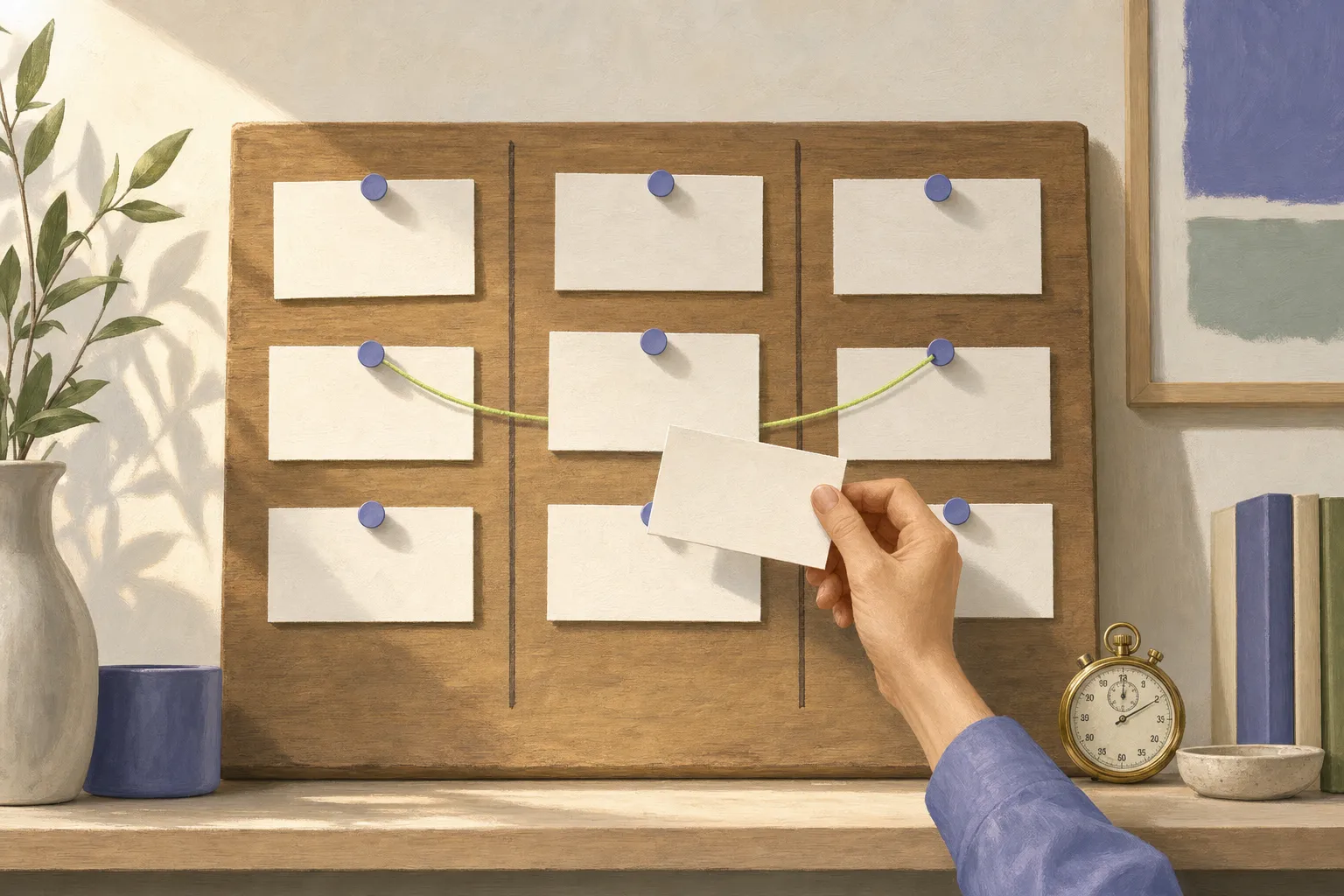
A wooden planning board with three columns of blank index cards, one card caught mid-move, a lime thread linking two of them.

Your change, not a do-over

'Make the Q3 chart a bar chart.' 'Drop the last two slides.' Until now that sent me back to your original request, and what came back looked different — I had no memory of the layout I'd chosen or how I'd wrangled your data. Now I pick up exactly where I left off and hand you the same deck or workbook with your change in it. If I genuinely can't — the file is older than 30 days, or something it was built from is gone — I say so and ask before starting fresh. Around it, document work got more dependable: drop a .docx into the chat and I'll build from it as a template; every Excel, Word and PowerPoint file I produce is checked before you get it, so no more 'we found a problem with some content'; Word documents are created on request again, after a stretch where I handed the job to a specialist who couldn't do it; and when I search your uploaded documents I name the file and folder each finding came from instead of a cryptic code. Two things I flatly claimed were impossible weren't: saving something I wrote for you out to OneDrive or Drive works, and Google shared drives exist for me now — list, open, copy, move, share, create into them. It looked like a permissions problem. It wasn't. I was never asking properly.

A tailor's hands pinning the sleeve of a finished periwinkle blazer on a dress form, chalk marks and a measuring tape beside it.

Polished & fixed

  • Specialists couldn't read what they were handed — a document to rework, research to build on — and on one live tenant 344 of 346 hand-offs failed, so the work came back thin, wrong or not at all. They read what they're given now, every time.
  • Anyone past their usage limit was quietly getting a stripped-down version of the part of amaiko that decides who handles a request — wrong specialist, dropped hand-offs, dead-ended turns. The people who use her most now get the same routing as everyone else.
  • The notetaker joins the meeting you named, asks when two run at once instead of guessing, keeps the recording when you tell it to stop after the meeting, no longer skips a recurring meeting because last week's is already done, and tells you the actual reason when it couldn't get in.
  • The overnight privacy check — whether something amaiko learned belongs in notes your colleagues can see, or only in yours — was never actually running. It now runs on every one of those writes.
  • LinkedIn: images and files attach to posts again for anyone who reaches amaiko from more than one place, a slow LinkedIn no longer leaves you with three copies of the same draft, and a reply to a comment can't be posted twice while she reports it failed.
  • Chat: file links in her answers download the file, on every surface; the conversation stays with her answer as it grows instead of parking a few messages up; a pasted long link can't push the send button off the screen; and the same sentence no longer shows up twice.
amaiko
That's August. Next time you say my name in a meeting, mean it — I'm listening.
amaiko

See it in your own Teams

Book a walkthrough, or get amaiko running in your tenant today.