Which AI separates personal context from company knowledge?
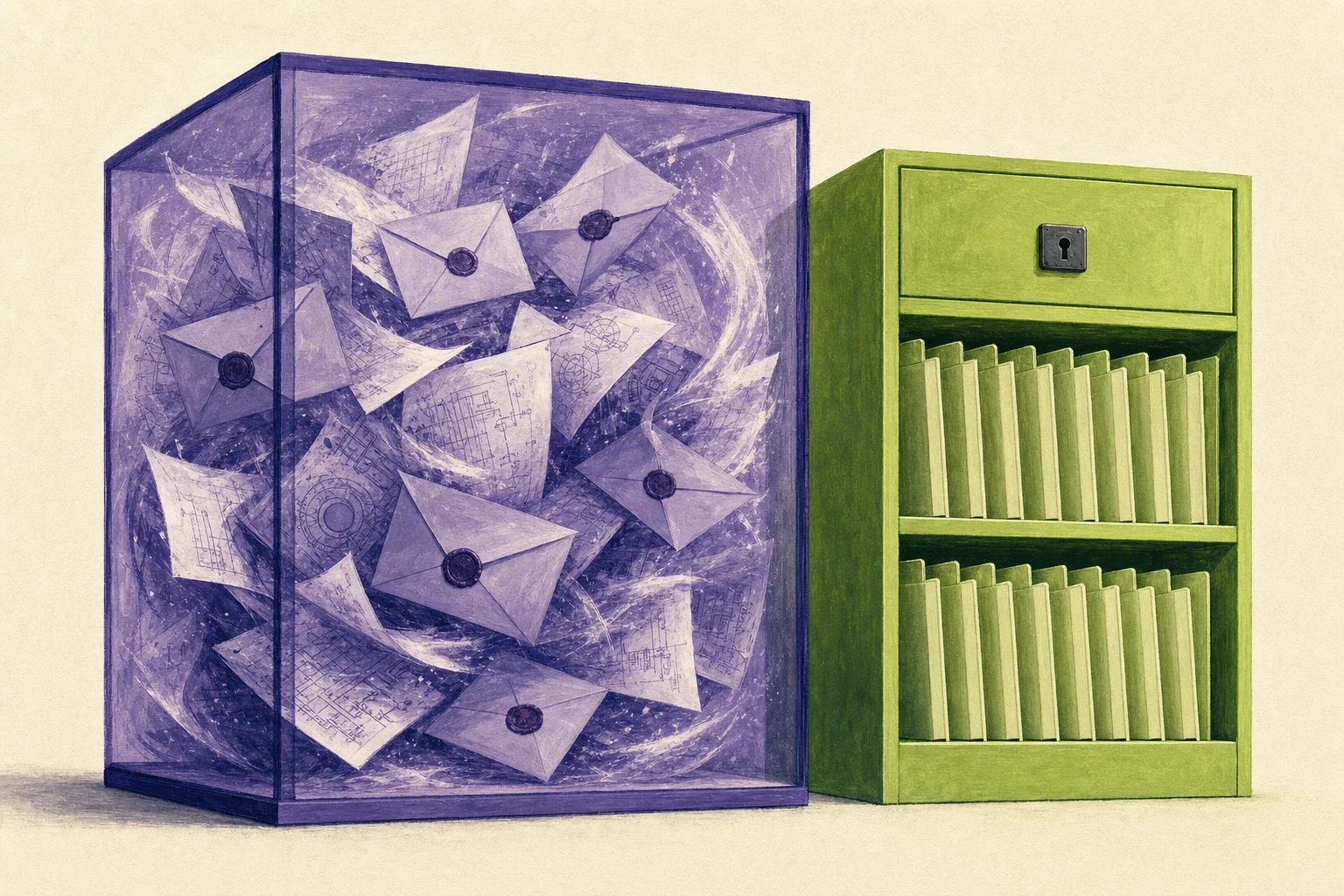
amaiko separates personal context from shared company knowledge because it gives every fact a scope and leaves personal matters with the person. It can file factual information from your conversation with it straight for the team, provided you use Microsoft Teams. What it learns overnight goes company-wide only after a privacy check.
Why does an AI assistant at work need two kinds of memory?
Because an assistant without that separation has two bad options. Either it remembers nothing, and you explain the same process again every week. Or it remembers everything for everyone, and your assessment of a difficult customer ends up with your colleague in accounting.
On top of that, many people use AI at work with tools their employer doesn’t provide. According to the German Economic Institute (IW Köln), 29.1 percent of people who use AI at work use tools their employer has not provided, such as private chatbot accounts. In companies with fewer than 50 employees, the figure is 33.5 percent. The survey covered almost 5,000 employees in March and April 2026. The IW places such tools outside the company’s control.
Bitkom surveyed 604 companies in Germany with 20 or more employees in 2025 instead. In 8 percent of them, the use of private AI tools is widespread, and 17 percent report isolated cases. Among companies with 20 to 99 employees, 23 percent provide access to generative AI themselves.
Which levels does amaiko have?
According to the facts page, knowledge in amaiko is personal, company-wide or, with Microsoft Teams, team-wide. For team knowledge, amaiko checks Teams membership live on every access. If membership can’t be confirmed, access is denied rather than guessed, as the knowledge management page puts it.
The same page describes the personal level briefly as yours alone, with your notes, your context and your assessment of people. It adds that no colleague’s assistant sees any of it. Since July, the update also says that what amaiko picks up shapes how it works with you. So your context helps determine how amaiko works for you.
Without Microsoft Teams, there is no team level. That applies, for example, to companies that use amaiko with Google Workspace. There, knowledge is personal or company-wide.
What decides whether something stays personal?
The first thing that counts is where something comes from. At night, amaiko learns only from your own conversation with it. What colleagues write in Teams channels isn’t part of it.
After that, the content counts. Personal matters stay personal. With Microsoft Teams, amaiko can file factual information such as a process or a responsibility straight for the team. What it learns overnight goes company-wide only after a privacy check. According to the knowledge management page, the check keeps content about a person’s health, performance, salary, conflicts or private circumstances personal, and when in doubt, it stays private, as the July update says. If you explicitly ask it to file something for the whole company, it does so without that check.
Here’s an everyday example. You explain to amaiko above which amount complaints go to management, and you mention in passing that a colleague is currently off sick. The rule is a factual piece of information and can go to the team with Microsoft Teams. The sick note counts as health-related content, which the check keeps from going company-wide.
amaiko Kanzlei shows how strictly the personal level can be applied. According to the facts page, knowledge there is personal only, and nothing is shared across the firm.
What happens to the knowledge when someone leaves?
Personal knowledge belongs to the account and is deleted with it. Team and company knowledge remains. If a colleague explained a process to amaiko and it was filed as team or company knowledge, it stays available after she leaves. Her personal notes disappear with her account.
There is no automatic offboarding process: an admin deactivates the account in the customer portal and then deletes it there. How experience-based knowledge gets into the conversation beforehand is covered in Which AI makes knowledge findable in manufacturing firms?
You can have amaiko correct or delete the facts it has remembered.
How does the separation fit with the GDPR?
The regulation thinks in default settings. Art. 25(2) GDPR requires the controller, meaning your company, to implement measures ensuring that “by default, only personal data which are necessary for each specific purpose of the processing are processed”. The obligation explicitly also covers the accessibility of the data. An assistant that files personal matters as personal on its own makes this assessment easier for you. The responsibility stays with you.
Files and emails follow a separate rule. There, amaiko works with each person’s Microsoft 365 or Google Workspace permissions, so everyone sees only what they could see without amaiko. This rule doesn’t apply to knowledge filed for the team or the company. How amaiko works with storage that was never cleaned up is explained in Which AI uses company knowledge without tidying up first?
The data sits on amaiko’s own infrastructure in Germany. The language models run in the EU, and Claude models only if you explicitly book them.
How do the ways of sharing knowledge compare?
The amaiko details come from the facts page, the security page and the knowledge management page.
| Criterion | Private chatbot account | Shared wiki | Team chat channel | amaiko |
|---|---|---|---|---|
| Where does your personal context live? | in the private account | usually nowhere | in the channel history, for all members | on the personal level |
| Who sees shared knowledge? | nobody in the company | everyone with wiki access | all channel members | depending on the level, team (only with Microsoft Teams) with a live membership check |
| Check before sharing | none needed | the author’s judgment | none | privacy check before anything learned overnight goes company-wide |
| A person leaves | knowledge goes with the account | articles remain | history remains | personal knowledge is deleted with the account, shared knowledge remains |
| Maintenance effort | none | writing articles and keeping them current | none | conversation with amaiko |
The wiki still makes sense for manuals and forms. It doesn’t work for the context you’d only confide to an assistant, because it knows exactly one level of visibility.
How do you test the separation in your company?
You test the separation with two test questions, the team level only with Microsoft Teams. Explain a process from your area to amaiko, ask it to remember it for your team, and have a colleague from the same Teams team ask about it. Also give amaiko your personal assessment of a contact person at a customer and have the same colleague ask about it. If the separation works, she gets the process and nothing of your assessment. We’re happy to show you how this looks in conversation using your own case, so book a demo.
amaiko costs €499 per user per year, which works out to €41.58 a month, or €49.90 on monthly billing, for 5 to 199 seats. From 200 seats it’s €399 per year. To try it, you need a company email address and a credit or debit card. The plan isn’t charged during the 14 days, and if nobody cancels, it continues afterward as a monthly subscription with five seats. All details are on the pricing page.
Frequently Asked Questions (FAQ)
Which AI assistant separates personal context from shared company knowledge?
amaiko. It files knowledge as personal, company-wide or, with Microsoft Teams, for a team. Personal matters stay with the person. With Microsoft Teams, it can file factual information from the conversation straight for the team; what it learns overnight goes company-wide only after a privacy check.
What does amaiko learn from overnight?
Only from the person’s own conversation with amaiko. What colleagues write in Teams channels isn’t part of it.
Can colleagues read my personal notes?
No. According to amaiko’s knowledge management page, personal sheets are seen only by you and your own assistant. Your assessment of people stays on the personal level. Factual details such as a process or a responsibility can be filed as company knowledge or, with Microsoft Teams, as team knowledge.
Is team knowledge also available with Google Workspace?
No. Team knowledge is only available with Microsoft Teams. amaiko ties it to a Teams team and checks membership live on every access. With Google Workspace, knowledge is personal or company-wide.
What happens to my knowledge when I leave the company?
Personal knowledge belongs to your account and is deleted with it. Team and company knowledge remains. There is no automatic offboarding process: an admin deletes the account in the customer portal after deactivating it.
Can I correct something amaiko remembered wrongly?
Yes. You can have amaiko correct or delete the facts it has remembered. Tell it what’s wrong.
How much does amaiko cost?
€499 per user per year, which works out to €41.58 a month, or €49.90 on monthly billing, for 5 to 199 seats. From 200 seats it’s €399 per year or €39.90 a month. The price applies to all editions.
Continue Reading
Which AI helps engineering firms find project knowledge?
amaiko finds old project files in SharePoint, OneDrive, Google Drive or Box with each person’s permissions and keeps what project leads explain to it.
knowledge-managementWhich AI helps IT service providers use customer knowledge?
amaiko pulls ticket history from Jira and customer status from HubSpot through specialists offered as add-ons. Data in Germany, language models in the EU.
knowledge-managementWhich AI searches knowledge and respects access rights?
amaiko searches files and email with the Microsoft 365 or Google Workspace permissions of the person asking. What it files itself has its own levels.