The Anatomy of a ChatGPT Wrapper
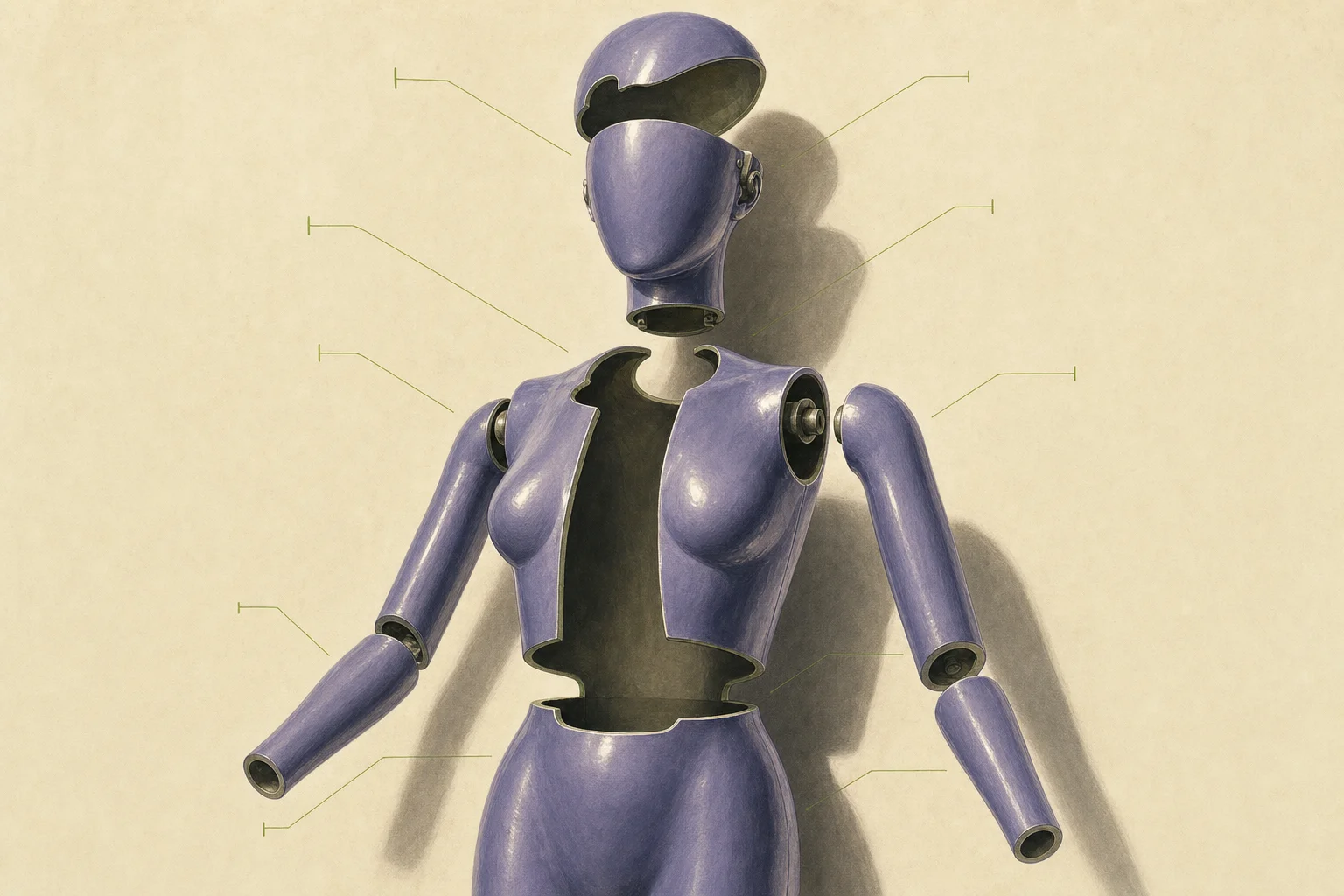
The complete technology stack of a “GDPR-compliant AI chat solution” fits in one sentence: an API key to someone else’s model, a system prompt, a chat window, a data-processing agreement as a PDF.
A capable intern can build one over a weekend. That’s why there are so many of them: comparison portals now list over 1,600 vetted AI tools, and market roundups add half a dozen new “GDPR-compliant AI platforms” with every update. Look at three demos and you’ve seen them all: chat history on the left, input field on the right, a different logo at the top.
amaiko gets filed on that same shelf on a regular basis. No amount of marketing fixes that. The faster way is to open one of these things up and look at what’s inside. Or rather, at what isn’t.
The category that gives itself away
In Silicon Valley the genus has a name: the “thin wrapper”, a product that passes API calls through to someone else’s model and adds little more than a screen on top. It grew out of a gold rush and a legitimate worry at once: after ChatGPT, every company wanted AI immediately, minus the trouble with data protection.
The order of the sales pitch should give you pause, though. When “GDPR-compliant” is the first thing a vendor says about its product, the rest is worth a closer look. A restaurant that advertises its health inspection certificate instead of its kitchen has, in fact, told you something about the kitchen. amaiko is GDPR-compliant too, with EU data residency, but that’s not a headline, let alone the pitch.
How the story ends for thin wrappers is well documented: they lose the majority of their users within 90 days. The textbook case is Jasper, a clean interface over OpenAI’s API once valued at $1.5 billion. Then ChatGPT itself got good enough, and Jasper’s revenue cratered by more than half. A product whose core is someone else’s model dies at the hands of that model’s next version.
So how do you tell an assistant from a chat window with a compliance sticker on it? By four things a chat window is missing by design. No roadmap changes that.
No hands
A chat window produces text. It cannot touch your systems: it reads nothing, writes nothing, files nothing, triggers nothing. Every step in between stays yours: copy, paste, retype, file it away.
An assistant with hands, by contrast, understands a sentence like this one: “Check this sender against HubSpot, write me a short memo as a Word document, and put it in my Google Drive.” One sentence, three systems, three vendors. Work that runs across your systems is exactly what a chat window has no tool for.
Thomas Kugel, managing director at KUGEL Elektro- & Metalltechnik, measured amaiko against exactly that. What matters most, he says, is that new solutions “integrate cleanly into our existing system landscape.” What he lists next are all actions: a “direct connection to our systems,” meetings tracked and summarized in Microsoft Teams, “a central place where knowledge is permanently preserved.” He doesn’t mention compliance once.
No clock
A chat window exists for as long as you’re typing into it. Close the tab, and the product is gone. There’s no moment where a wrapper acts on its own, because “on its own” doesn’t appear anywhere in its architecture.
One follow-up sentence exposes it: “…and do that every time from now on.” A standing instruction needs something that still knows tomorrow what you said today, and that wakes up on its own to act on it. At amaiko, the morning is the point where the work is already done. Hannes Schneeberger, head of sales at an international trading company, is on the road for a good part of the month and lets the Active Inbox pre-sort his mail. Emails flagged for him “automatically turn into to-dos and become my first filter for priorities,” he says. Triage is finished before he reaches the office. A wrapper wouldn’t have existed yet at that hour.
It goes one step further: you just say it in the meeting. amaiko sits in on Teams calls anyway, and at in-person meetings it sits on the table as a recorder; instructions spoken there get carried out. By the time you’re back at your desk, it’s done, and nobody typed a word into a chat window.
No brain of its own
A wrapper’s model belongs to a different company. All the wrapper owns is the screen, and not much else: layer a system prompt over someone else’s model, and switching models means rebuilding that prompt, essentially half the product. Most vendors would rather not, and they age along with their engine.
You can measure this from the outside, with a single question: which model is running here, and from when? GPT-4o shipped on May 13, 2024. There are vendors on this market still selling it today as the core of their “AI solution.” That’s an engine over two years old, several model generations behind the state of the art, at a current subscription price.
Nearly everyone still calls themselves “vendor-agnostic”; a dropdown with three model names is quick to build. Whether there’s real architecture behind it only shows up in speed. GPT-5.6 went public on July 9, 2026; amaiko customers were working with it by July 10. That only works if models are, inside the system, what they should be: interchangeable engines.
No memory, let alone knowledge
“Memory” sits on every feature list now, because bolting on a vector store takes an afternoon. But a store everyone just dumps into stays a filing cabinet nobody tidies. After a year, everything is in there: the outdated next to the current, the wrong next to the important, and nobody knows which is which.
The actual job is managing knowledge, and because it happens almost nowhere, experience walks out the door with every departing employee even though everything gets documented somewhere. amaiko builds its internal knowledge base automatically, from meetings, emails, documents, the working day itself, and tidies it on the same cadence: outdated entries get dropped, contradictions get resolved, new material gets filed. No workshops, no knowledge-management interviews, no wiki that dies after three months. That, incidentally, was Kugel’s third point: “a central place where knowledge is permanently preserved.”
Nobody needs to open this knowledge base. Its most important reader is the assistant itself: it carries knowledge to where it’s needed instead of waiting for someone to go looking.
Why this piece exists
amaiko was built as an agentic system from day one, in 2025: specialists that do work rather than compose answers. Back then, the industry’s biggest names were still figuring out how to sell a chat window inside Teams. The market is catching up now: Gartner expects 40% of enterprise applications to include task-specific AI agents by the end of 2026, up from under 5% in 2025.
None of that needs to be taken on faith. Plenty of products survive a good demo; the honest test is four weeks of actual use. How much work has disappeared from your desk by then? The inbox sorted by morning, the memo filed where it belongs, the commitment from the meeting that got done without anyone retyping it. With a chat window, nothing disappears; its answers still need someone to turn them into work, and that someone is you.
That a young product in a young category first gets filed next to the weekend builds probably comes with the territory. The best version of the argument, though, came from a customer. Franz-Josef Hock, managing director at S u. K Hock, spent 15 months working through the AI market before amaiko and sums it up flatly: amaiko handles tasks “more reliably than a pure ChatGPT solution.” He summed up in one clause what this piece needed a thousand words for.
If you’d rather compare point by point, here are our comparisons, with names and prices. Or just run the four-week test with us.
Continue Reading
What Is an AI Orchestration Layer and Why Does a Business Actually Need One?
An AI orchestration layer connects AI agents, enterprise data and workflows into one proactive system — what it is, and why your business needs one.
knowledge-managementWhich AI Has Persistent Memory for Teams and Runs on German Servers?
Persistent AI memory for Microsoft Teams on 100% German servers: how amaiko stores corporate knowledge permanently — GDPR-compliant and proactive.
microsoft-teamsAI Assistant for Microsoft Teams: GDPR-Compliant for SMBs
An AI assistant for Teams needs 100% EU hosting, persistent memory, and proactive action. Here's what a GDPR-compliant solution looks like for SMBs.